2026-07-30
By: Victoria Zepeda
The Center for Information Technology Research in the Interest of Society and the Banatao Institute (CITRIS) continues its commitment to expanding access to technology education and strengthening the STEM pipeline through the NexTech Robotics program at UC Merced. By engaging middle school students through hands-on engineering experiences while supporting diverse university students as mentors and educators, the program addresses the need to create accessible pathways into science, technology, engineering, and mathematics (STEM) fields across California’s Central Valley.
The San Joaquin Valley represents a region where expanding STEM opportunities is essential for developing a future workforce that reflects the communities it serves. Research has demonstrated that culturally relevant, hands-on STEM experiences that incorporate the Engineering Design Process (EDP) can strengthen students’ STEM identity, self-efficacy, engineering knowledge, and confidence in pursuing STEM pathways [1]. Through active learning experiences, students are able to connect engineering concepts to real-world applications while developing problem-solving skills and a deeper understanding of themselves as future innovators [1], [2].
Building on this research, UC Merced CITRIS education interns have developed an extensive curriculum of engineering lessons that encourage students to learn through experimentation, collaboration, and design-based problem solving. These interns act as near-peer mentors to the middle school students, bringing curriculum to classrooms throughout Merced County. These approaches align with previous work demonstrating that hands-on engineering interventions can increase engineering awareness and inspire diverse groups of students to consider future careers in STEM fields [3].
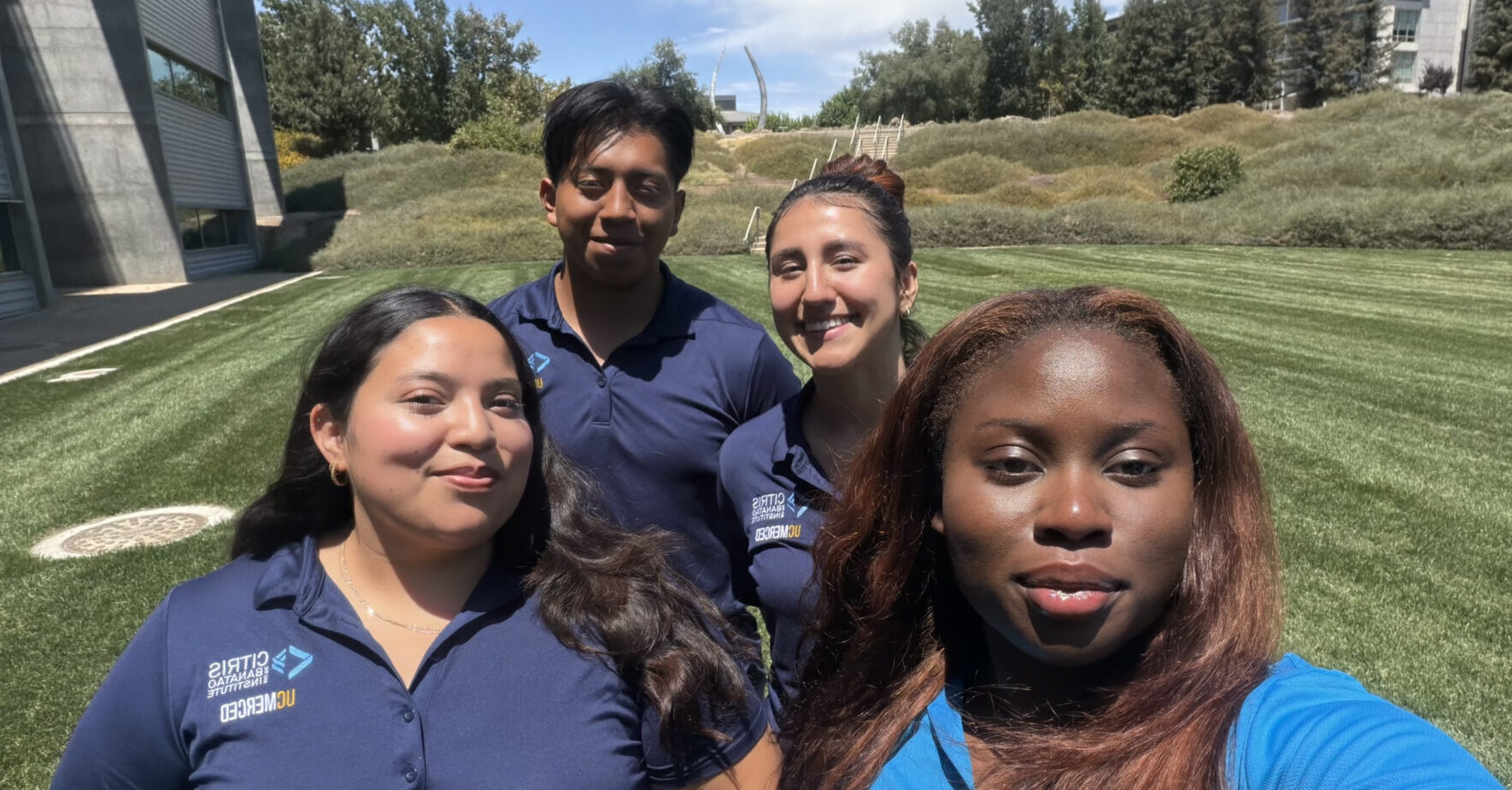
During a four-week summer program at Don Stowell Elementary School, CITRIS interns Dina Lua, David Miguel, Judith Okolo, and Victoria Zepeda worked directly with Merced City School District’s Summer Academy students in grades 6 through 8, introducing foundational engineering concepts through interactive lessons and robotics projects.
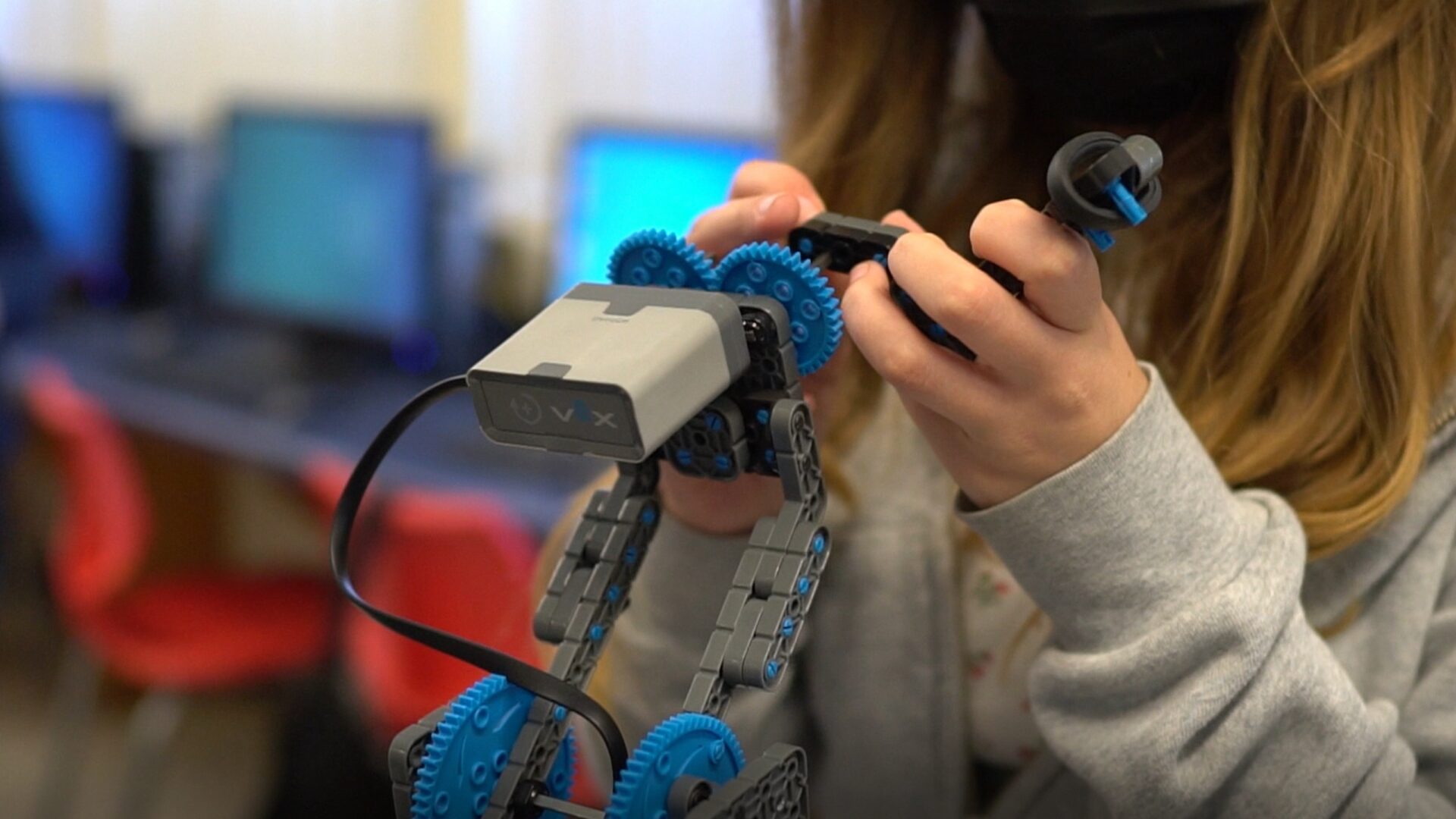
Throughout the program, students explored mechanical engineering principles including force, friction, torque, compression, rigid body mechanics, and levers. These concepts were applied through the design and construction of robots, allowing students to experience how engineering principles influence the performance and functionality of real systems.
Students also learned about important robotics concepts such as gear ratios, mechanical load, and system design. By building and testing their own robotic systems, students practiced the engineering design process by identifying challenges, developing solutions, testing designs, and improving their projects through iteration.
In addition to mechanical engineering, the program introduced students to computer science through hands-on Python programming lessons. Students learned foundational programming concepts including for loops, functions, and parameters, then applied these skills to control and interact with robotic systems. This connection between software development and physical engineering demonstrated the interdisciplinary nature of modern technology fields.
Beyond technical instruction, NexTech Robotics emphasizes mentorship, representation, and belonging in STEM. The undergraduate interns serve not only as instructors but also as role models, showing students that engineering pathways are accessible and achievable. Research has shown that STEM identity develops through meaningful experiences, encouragement, and opportunities for students to see themselves as members of the STEM community [1], [2].
The experience was equally transformative for the undergraduate mentors. Working directly with middle school students strengthened not only their technical communication skills but also their understanding of engineering as a collaborative and community-centered profession.
For Judith Okolo, teaching students changed her perspective on teamwork and communication. “When it comes to having a project or working in teams, because we have different ways of thinking, it really opened my eyes to my own communication skills and how I would want to express concepts so students can understand them. Especially seeing how the students themselves interact, I enjoy observing how they communicate and considering what I can apply to real-world scenarios in the engineering industry.” Her experience highlights an often-overlooked aspect of engineering education: the ability to communicate complex technical concepts clearly and collaborate effectively with diverse teams.
Representation is especially important during middle school, a critical period when many students begin forming long-term academic identities and making decisions about future educational pathways. Research has highlighted that young women and other underrepresented groups continue to face barriers that influence their persistence in STEM fields [4]. Providing early access to engineering experiences, supportive mentors, and inclusive learning environments can help students maintain interest and confidence as they continue their education.
Outreach programs benefit not only K-12 students but also the undergraduate mentors themselves by strengthening leadership skills, reinforcing a commitment to community engagement, and shaping future career aspirations. For David Miguel, mentoring students reinforced the importance of service as part of his future engineering career. “It’s made me realize just how much more I can give back. It made me think about how much work I’ve done to get where I am today and how much I can offer as I’m continuing to grow. It really helped me reflect on what sort of career I want to pursue. Now I know that a big part of my future career is going to be a role where I can mentor, serve, and give back. Supporting the future is such a rewarding experience for both the mentor and the mentee.”
NexTech Robotics has served nearly 1,000 students in the San Joaquin Valley since 2015. By bringing engineering education directly into local classrooms and connecting students with university near-peer mentors, the program creates opportunities for young students to explore STEM careers while building the skills and confidence needed to pursue them.
As technology continues to shape the future workforce, initiatives that introduce students to engineering, robotics, and computer science at an early age are critical. Through collaboration between UC Merced students, educators, and local schools, NexTech Robotics continues to inspire the next generation of engineers and innovators across California’s Central Valley.
NexTech Robotics is supported through CITRIS and the Banatao Institute at UC Merced in partnership with IoT4Ag – The Internet of Things for Precision Agriculture: a U.S. National Science Foundation Engineering Research Center. If you would like to learn more about our curriculum or are interested in CITRIS visiting your school, please reach out to citris@ucmerced.edu.
References
[1] B. E. Barajas-Salazar, M. Almeida, Z. Aguirre-Muñoz, and M. Viveros, “Culturally Relevant Informal STEM Learning for Underserved Students: Effects of Repeated Exposure to the Engineering Design Process,” Frontiers in Education, vol. 10, 2025. https://doi.org/10.3389/feduc.2025.1534452.
[2] J. Çolakoğlu, A. Steegh, and I. Parchmann, “Reimagining Informal STEM Learning Opportunities to Foster STEM Identity Development in Underserved Learners,” Frontiers in Education, vol. 8, 2023.
[3] B. E. Salazar, M. Almeida, Z. Aguirre-Muñoz, and M. Viveros, “Sparking Engineering Passion: Hands-on Science and Engineering Adventures for Diverse Future Innovators,” Proceedings of the 2024 ASEE Annual Conference & Exposition, 2024. https://doi.org/10.18260/1-2–47986.
[4] American Association of University Women (AAUW), Why So Few? Women in Science, Technology, Engineering, and Mathematics. Washington, DC: AAUW, 2010.
[5] J. L. Carrico, M. M. Lee, and J. D. R. colleagues, “The Role of Informal STEM Learning Experiences in Supporting STEM Engagement and Career Interest Among Underrepresented Students,” Journal of STEM Outreach, 2022.
© CITRIS and the Banatao Institute at UC Merced 2026 | Contact Us